

Cancellations are like nuclear explosions. They throw up heat and blinding light from minute fissures in tiny communities such as the knitting world or UK poetry circles and cast down debris that remains toxic for years. The clouds of righteousness are so vast and the ideology so shiny that often the igniting sparks are obscured.
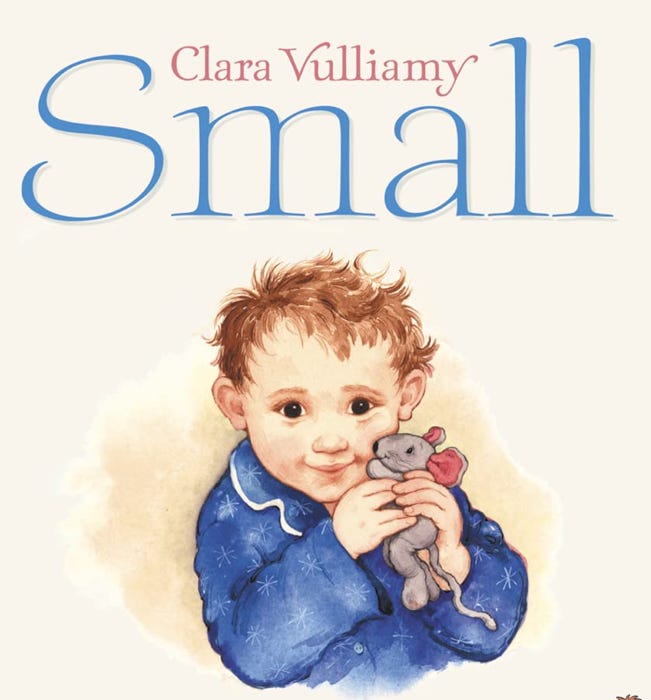
No one, for example, accused children’s writer and illustrator Clara Vulliamy of envy when she took a leading part in the cancellation of fellow children’s writer Rachel Rooney in 2019. Why would they? Vulliamy apparently had no reason to be jealous. She was already a established children’s writer and illustrator when Rooney published her first book in 2011 and, despite Rooney’s meteoric success, was still far better known when the cancellation took place. Vulliamy was also wealthy and privileged well beyond the aspirations of Rooney, who was a special needs teacher and single mother, because she was the daughter of the enormously famous children’s writer Shirley Hughes. This also meant Vulliamy was dazzlingly well connected, part of a tiny literary elite.
But perhaps that was the problem. As we may see from the plight of Brooklyn Beckham, it is not easy to be a nepo baby, especially if you are an artist. Though she was nearly sixty in 2019, Vulliamy still hadn’t achieved an independent artistic identity. Her mother was mentioned in all her publicity and their collaborations were Vulliamy’s most successful works. Rooney, in contrast, had achieved success late in life from a humble background. In 2019 Vulliamy was working on a book for Faber with Polly Faber of the Faber dynasty about a cat in the Faber offices. It is possible to imagine Vuillamy looking up from this project to see Rooney’s latest book, illustrated by Chris Riddell, named as a finalist for two prizes and envying not just Rooney’s originality but her authenticity, her lack of reasons to doubt her own talent.
Besides, if envy wasn’t a cause, what was? It can’t have been about Rooney’s words in the controversial ‘ My Body is Me’, because Vulliamy launched her attack before the book was published or any review copies were available: no one had read it. If Vulliamy had wanted to write about her views on gender and children’s books many outlets were open to her - she didn’t need to create a profile. If it was the wider book project then it is strange that only Rooney was attacked. Vuillamy specifically exempted the illustrator of the book, Jessica Ahlberg - who had in fact initiated the project - and Twitter followed her lead.
And the attack was very personal. Vulliamy publicly appealed to the agency that placed Rooney in schools and implied that Rooney was damaging children. @AuthorsAloudUK you need to be aware of this with author Rachel Rooney who is on your books; ideologically driven school visits could see us all in deep water…We aren’t entitled to income at the expense of the wellbeing of schoolchildren. (Tweet December 2019)
This isn’t as small a thing as it may appear. An author visit to a state school is a once-a-year expense from a straitened budget. There are a large number of authors eager for the work. Even a murmur of controversy about a writer could easily spread in a parents’ WhatsApp group and mire the occasion in dispute. So it didn’t matter that Rooney’s professional credentials and record in schools were and are immaculate: a popular tweet from a well-connected person could make her very hard to book.
But, you might ask, is a children’s writer allowed to say that her rival shouldn’t be employed in schools? Isn’t that a bit like a greengrocer saying that next door’s lemons are mouldy? And isn’t that in turn restraint of trade and so that rare thing, an actionable libel?
Rooney also thought of that question. She didn’t have money for a solicitor so she took the tweet to the union where she had been proudly paying her dues for several years: the Society of Authors. First, they told her it wasn’t libelous. Rooney persisted. A staff member passed the tweet, which by now had been retweeted by several prominent board members, including the Chair, to the CEO, Nicola Solomon, who also acted as the Society’s in-house lawyer. Solomon advised, in capital letters, that it WAS ‘ potentially defamatory.’ But she didn’t think the staff member should tell Rooney so. Instead, she suggested telling Rooney to ‘get advice’ while the SOA sent
Clara and others our guidelines – basically saying play nicely- but I am concerned it will escalate, not settle. I am seeing Shirley fairly soon and could have a quiet word?
Yes, you read that right. In response to a serious legal query the Society of Authors CEO suggested talking to an author’s mother and asking her to ‘play nicely’. Rather than be told that an experienced lawyer thought the tweet was potentially defamatory, Rooney was sent a baffling set of links mostly about self-care and well-being. Rooney is autistic and unusually literal and trusting. The SOA knew that and they knew how to take advantage of it. Soon the staff member was messaging Solomon under the subject line ‘Wrapping up Rachel Rooney for Christmas’ that ‘Rachel has stopped emailing/DMing me now’. She had, she said ‘deliberately left out any mention of restraint of trade issues’ in her communications with Rooney.
There are several things to note here. One is that this strategy was unsuccessful. The controversy did escalate. Vulliamy retweeted her attacks the following year and Rooney, her career and confidence in ruins, now works as a carer. We can only speculate what effect a firmly worded cease and desist letter might have had on Vulliamy in 2019. Rooney discovered the email trail in 2022, too late to take legal action.
Then there is the arrogance and paternalism of it all – the glaring failure to play by the union’s rules, to give Rooney the service she had paid for and the honest advice she deserved. Solomon’s actions speak to me of an ingrained habit of command and also of poor governance and oversight. Nine months’ later, SOA president Philip Pullman will find himself the victim of what seem to be similarly autocratic manoeuvres, and so will I.
But I am perhaps most struck, in the context of all the talk of inclusion and diversity, by the prejudice so openly on show. The Society of Authors does not hesitate to exploit the credulity of someone they know to be autistic, ridiculing her behind her back. It does not seem to occur to their CEO that she is treating Rooney as less important than wealthy, connected, ‘Clara’ and ‘Shirley’, any more than it occurred to Vulliamy that she was treating Rooney differently to Jessica Ahlberg, daughter of Janet and Allan Ahlberg and another member of the literary elite. But it’s blatant elitism, crude class prejudice, and cowardice beside. A scapegoat was selected who couldn’t afford a lawyer and who didn’t have powerful friends to fight her corner and none of these fine, right-thinking people could see that was unfair. That’s the trouble with declarations of virtue: with your eyes on heaven, like Burns’ Holy Willie, you can’t see what your hands are doing.
More
The companion piece to this post is Who Framed Philip Pullman?, here
Rachel Rooney complained about her treatment to the Society of Authors. You can read about that in full here.
So did I, and my post is here.
I have more detail about the Chair of the SOA, Joanne Harris and my own cancellation here and here.
I believe that the Society of Authors should apologise to Philip Pullman and Rachel Rooney and undertake a root and branch reform of their governance and processes. If you agree and are a member you could write to them.
Brilliant forensic bit of writing, as ever. Thanks for this. Rachel's story still needs to be heard. I only wish that there was some way that the real culprits could be made to pay for what they did. It was utterly shameful.
RR would have had a clear case of libel, I’d have thought, but up against a multi millionaire’s daughter, no chance.